Permaculture & Organic Farm
We grow vegetables, coffee, and twenty kinds of fruit — without chemicals, and with a great deal of patience. Our gardens feed the café, the community, and each other.
Why we grow food this way
After the Second World War there were huge surpluses of ammonia and nerve gas. Scientists of the time found a new use for them — ammonia became fertiliser; nerve gas became pesticide. That is how the modern chemical farming industry began. By the 1990s even the scientists were admitting that putting killing agents into the food chain was behind a great deal of disease and cancer.
The current answer is genetic engineering. But it is the same mindset — the same arrogance — with risks we cannot yet foresee.
At Karuna we use our scientific brains too. But to harmonise with nature, not to challenge it. Their way is temporary and destructive. Ours is quieter and more forgiving.
The vegetable garden
Before Karuna, this land was potato fields. When Nevil arrived, much of it was planted with avocado, banana, and other fruit trees. The prime terraced farmland near the rock was left to rest for many years.
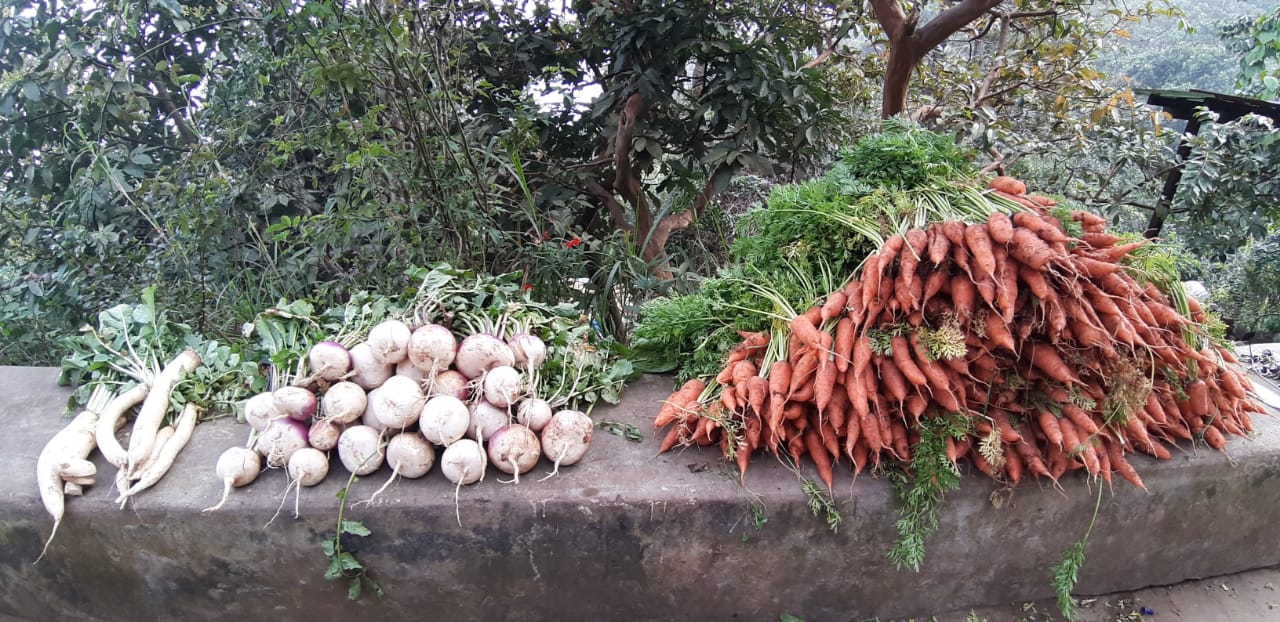
In 2013 we tilled it with bulls and planted carrots, peas, and beans. In 2014 we expanded — more than twenty vegetables now, feeding both our community and our guests. A solar-electric fence protects the garden from monkeys, bison, wild boar, and small thieves (our carrots used to disappear with suspicious regularity).
We work with a combination of methods — organic, permaculture, biodynamic, biointensive. Composting and vermiculture (worm composting). Biodynamic preparations and planting calendars. Companion planting, home-made sprays, and a great deal of learning each season.
We also run training programmes for anyone who wants to learn organic farming hands-on.
Fruit & coffee plantation
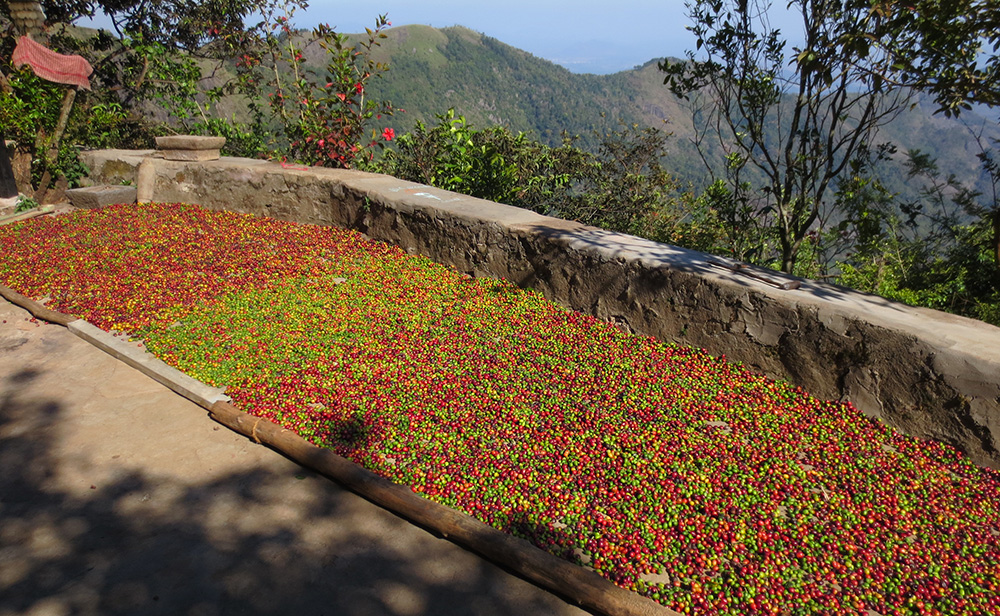
About two-and-a-half acres are planted with high-quality Brazilian coffee, alongside twenty varieties of fruit trees — banana, avocado, oranges, cardamom, limes, jackfruit, custard apple, guava, passion fruit, berries, and more. What isn't eaten fresh becomes jam and preserves.
There is still a lot of scope to scale the fruit side up.
Growing food is a continuous and very pleasing activity. If you have an argument with your partner, do some weeding — nature will absorb the tension.
Good land, good climate
The climate is mild year-round; the soil is generous and the water is reliable. We've layered irrigation, composting, and careful planning on top of those natural gifts.